Article: Giving Back to the Region That Raised Her

Born and raised in Houston, Texas, Kristin Nafziger has spent her career working alongside education systems to improve outcomes for students and families—particularly across the Southwest.
Today, she leads the Southwest Comprehensive Center (CC), partnering with state educational agencies in Arkansas, Louisiana, New Mexico, Oklahoma, and Texas. The work is focused and practical: helping states address their most pressing challenges with approaches that are grounded in evidence and built to work in real-world conditions.
The region is defined by striking contrasts and high-speed growth—spanning rural communities, Tribal nations, border regions, and rapidly growing urban centers. State leaders are navigating workforce shortages, shifting demographics, and increasing expectations to deliver results. Nafziger’s approach is rooted in the belief that meaningful improvement comes from working with state leaders to build coherent systems that reflect their specific context and priorities.
To effectively contribute toward educational system improvements in this context takes more than technical skill alone. It requires humility, cross-sector fluency, and a deep respect for the realities of the people and systems in our region. Kristin brings a rare combination of strategic clarity and practical understanding of how systems actually work—and how to move them forward.
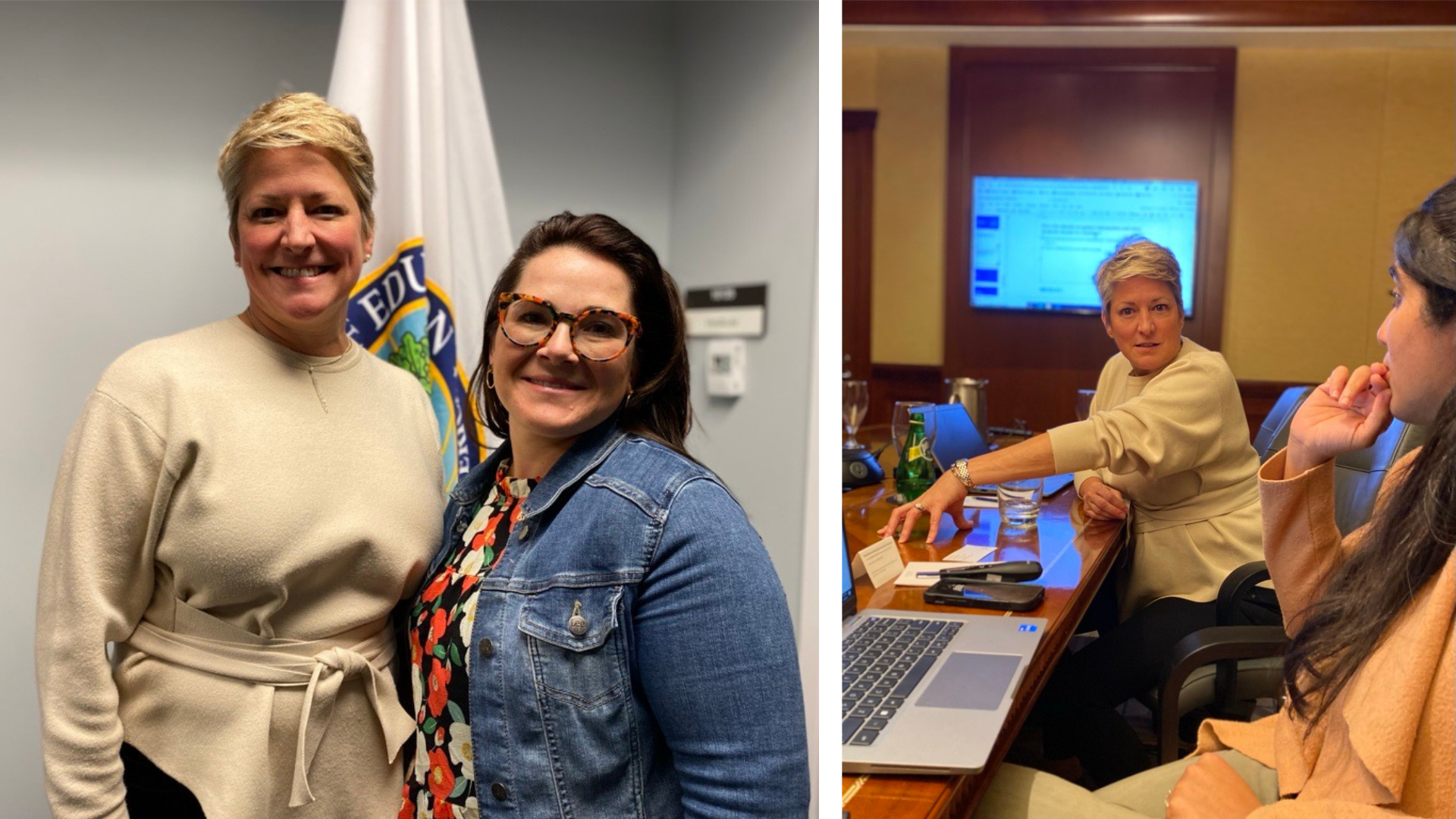
Kristin Nafziger, director, Southwest CC, with Erin Keltz (left), program officer, U.S. Department of Education, and Anushka Shirali (right), Deputy Director, National Comprehensive Center.
Continuity of Leadership and Results
From 2019 to 2024, Kristin led the Region 14 CC, supporting Arkansas, Louisiana, and Texas. That work has since evolved into the Southwest CC, expanding its reach to include New Mexico and Oklahoma.
“The throughline across our projects, which can look very different state to state,” reports Nafziger, “is that they are grounded in evidence and tailored to the realities of state systems and the individuals they serve.”
One of Nafziger’s key contributions to the field is the Project Success Framework (PSF)—a research-informed tool that identifies nine essential elements needed for successful implementation. Developed in partnership with state leaders, the PSF has been adopted by multiple comprehensive centers and state partners and highlighted nationally.
The Project Success Framework has become a flagship resource that offers states and districts a clear, actionable way to diagnose project health and strengthen implementation.
Sculpting Systems, Coherently
Nafziger and her team build the connective tissue that helps state education initiatives move from high-level policy to reliable, everyday practice. By focusing on coherence, the team partners with educational agencies to align fragmented efforts into integrated systems that will serve students at scale.
This partnership often requires overcoming logistical hurdles that can slow down progress on state-level goals. For example, the team has helped agencies transition from using manual, static processes to creating and adopting interactive digital ecosystems, including:
-
Modern instructional leadership coaching frameworks
-
Modern human resources data architecture to support workforce stability
-
Streamlined school performance monitoring
“When states transform scattered data points into standardized, functional infrastructures, leaders get new clarity needed to manage complex priorities and make data-driven decisions,” Nafziger says. “Functional and sustainable processes are often what help state and district leaders maximize their internal capacity and focus limited resources where they matter most: on students and teachers,” she adds.
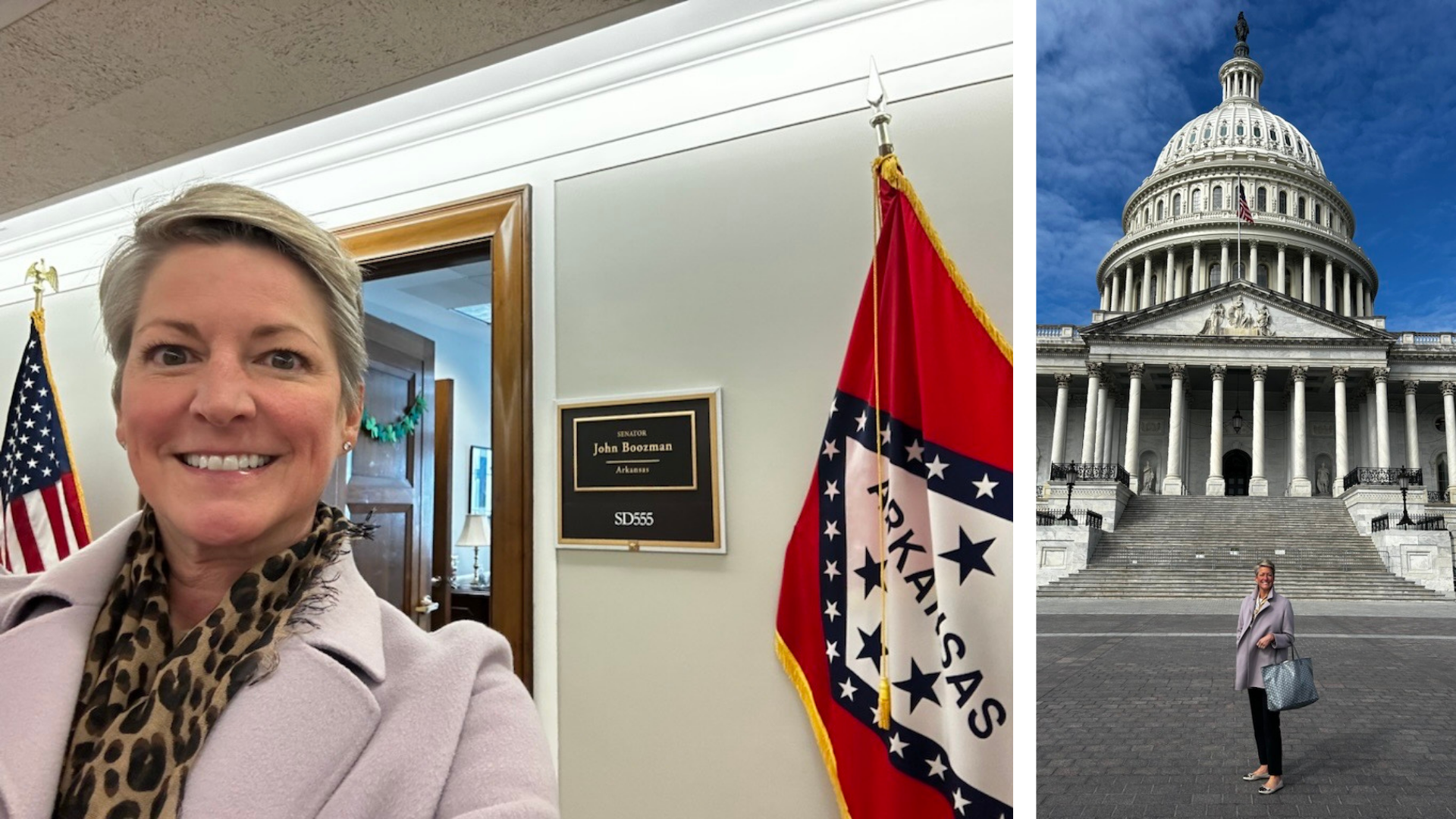
Kristin Nafziger outside the Arkansas Senate office on Capitol Hill during meetings with congressional staff, Washington, D.C., 2026
Building Systems That Work
Earlier in her career, Kristin worked across Texas and nationally to strengthen how education systems operate—turning state priorities into results. For example, she has:
-
Supported benchmarking and quality improvement work with districts and state partners at the American Productivity & Quality Center
-
Led statewide training, monitoring, and continuous improvement efforts for more than 1,500 schools through Texas’s 21st Century Community Learning Centers program
-
Designed and implemented initiatives focused on student success and cross-sector partnerships
A consistent thread across this work is a focus on performance—helping organizations use data, processes, and clear goals to improve how they operate.
A Listener First, Then a Coherent Strategist
In a field known for siloed initiatives, high leadership turnover, and constantly shifting new demands, partners describe Nafziger as one who enters a room with curiosity, seeking to understand what matters most. She often asks:
-
What are you trying to achieve?
-
What is getting in your way?
-
What would success look like here?
The key, she says to translating complex needs into actionable plans is to be sure to pull all relevant voices into the driver’s seat to steer the work itself. That includes, she reports, tethering change to evidence-based community needs, focusing on the user experience in designing solutions, synthesizing relevant perspectives within and across agencies, and more.
For example, In Bentonville, Arkansas, Nafziger’s team operationalized this approach by partnering with the district to reimagine two underutilized schools. By synthesizing research from national school models with direct input from families and educators, her team ensured the transition was tethered to community needs, resulting in increased enrollment and expanded parent choice.
Looking Ahead
To Nafziger, helping education systems function more effectively so they can better serve students and families means navigating complexity with clarity, building strong partnerships, and staying focused on what works.
“I see brilliance in state leaders and staff,” she reports. “Comprehensive Center teams are uniquely situated to help cut through the noise so agency leaders and staff can make decisions that are in the best interest of their students, faster,” she says. “I am honored to play a small role.”